In 2026, the global pharmaceutical research and premium cosmetic ingredient sectors are undergoing a profound supply chain restructuring. Driven by an exponential surge in international demand for high-performance, high-purity peptide materials—including bulk research peptides, core metabolic research agents, and cosmetic peptide ingredients—traditional, low-efficiency, and high-energy manufacturing models are being rapidly phased out. Confronted with increasingly stringent international compliance standards and heightened buyer demands for supply chain continuity, future-focused, top-tier peptide factories are expanding far beyond basic contract manufacturing. Instead, they are aggressively pivoting toward four core technological transformations designed to establish deep competitive moats:
1. Hybrid SPPS/LPPS Synthesis and High-Efficiency Scale-Up of Long-Chain Peptides
While traditional Solid-Phase Peptide Synthesis (SPPS) excels at the rapid development of custom sequences, it faces severe bottlenecks regarding excessive solvent consumption and high manufacturing overhead when transitioning to bulk commercial production at the multi-kilogram level.
In 2026, leading peptide factories are widely deploying Hybrid Peptide Synthesis (incorporating both solid-phase and liquid-phase synthesis). By assembling core short-chain segments via solid-phase matrices and subsequently coupling these fragments through liquid-phase technologies, this process slashes chemical solvent waste. More importantly, it resolves the historical engineering headaches of deletion peptides and steric hindrance during industrial process scale-up, achieving a perfect equilibrium between higher yields and minimized factory-gate costs.
2. Microwave-Assisted Synthesis and Fully Automated Green Chemistry Matrices
Environmental compliance and green chemistry have become the absolute baseline for modern industrial survival.
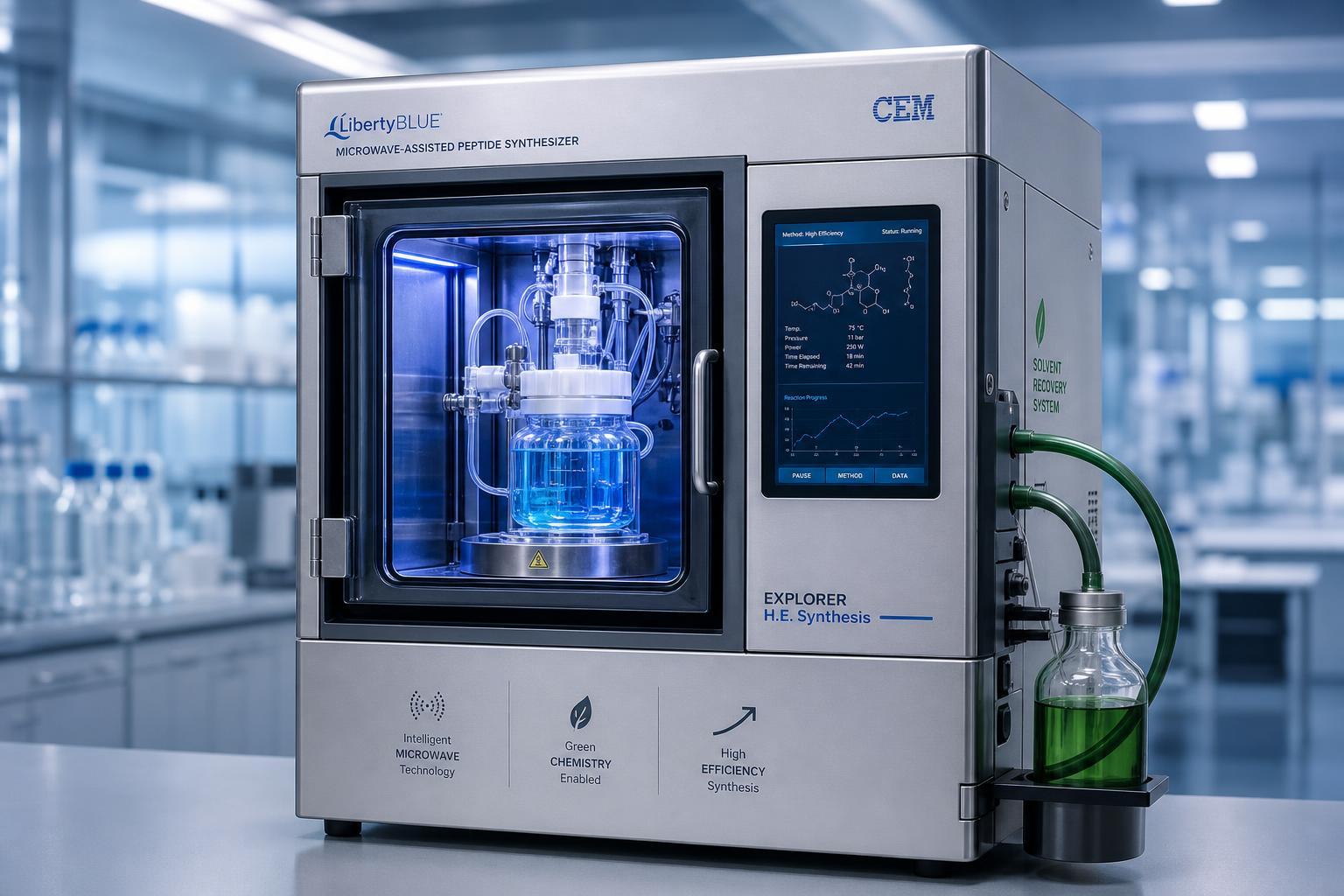
◾ Microwave Coupling Technology: Future-proof peptide factories are universally equipping their assembly lines with industrial-grade microwave-assisted peptide synthesis systems. Microwave energy directly targets the peptide backbone, effectively disrupting the aggregation of challenging hydrophobic amino acids. This cuts down traditional multi-hour coupling reactions into mere minutes while delivering substantially higher crude purity.
◾ Green Solvent Alternatives: Factories are progressively transitioning to low-toxicity, recyclable alternative solvents aligned with global environmental initiatives. By replacing hazardous traditional chemicals, they ensure that factory waste streams fully comply with international environmental audits, completely eliminating supply chain compliance anxieties for overseas brand owners.
3. Advanced Oxidation Resistance and Bio-Delivery Encapsulation Technologies
Within the B2B supply chain, trending raw materials such as Copper Peptide (CU Peptide) have always imposed severe logistical burdens due to their susceptibility to discoloration, degradation, and loss of biological activity.
To improve the compatibility of these ingredients during long-haul cross-border shipping and downstream formulation blending, premier R&D centers are expanding into "application-end engineering." By developing nanoscale microencapsulation technologies, optimizing crystal matrices, and precisely controlling counter-ion salt bases, factories have drastically augmented the tolerance of peptide materials against light, heat, and complex pH environments. This eliminates hidden losses during cross-border trade and simplifies the formulation process for downstream chemists.
4. Comprehensive Digital Traceability and Pharmaceutical-Grade Testing Calibration
Global search engine indexing policies and international customs frameworks now demand unprecedented structural transparency for biochemical raw materials. To address this, top-tier peptide factories are shifting toward fully digitalized, transparent workshops.
Every metric—from the procurement of initial amino acid starting materials and synthesis reaction parameters to multi-stage Preparative High-Performance Liquid Chromatography (Prep-HPLC) purification and Mass Spectrometry (MS) verification—is digitally logged to automatically generate verified traceability codes. The accompanying Certificates of Analysis (COAs) and chromatograms are no longer simple static documents, but digital assets verifiable in real time via secure online portals. This exceptionally high level of regulatory transparency enables international brands to finalize import declarations swiftly, ensuring bulk shipments pass seamlessly through global customs checkpoints.
Conclusion
The peptide raw material restructuring of 2026 is, at its core, a contest of technical sophistication. The leading "peptide factories" of tomorrow are no longer basic processing workshops; they have evolved into comprehensive technological platforms integrating high-efficiency synthesis, green manufacturing, stabilized formulation application, and digitalized compliant logistics. By anchoring themselves within these forward-looking transformations, source factories not only guarantee the consistent delivery of 99%+ premium purities, but also establish an unshakeable foundation of global trust amid a volatile international life science and beauty supply chain ecosystem.
Our Product
Online Message
Online Message

Thank you very much for writing to us. Please leave your message and contact information, we will reply to you within 24 hours.