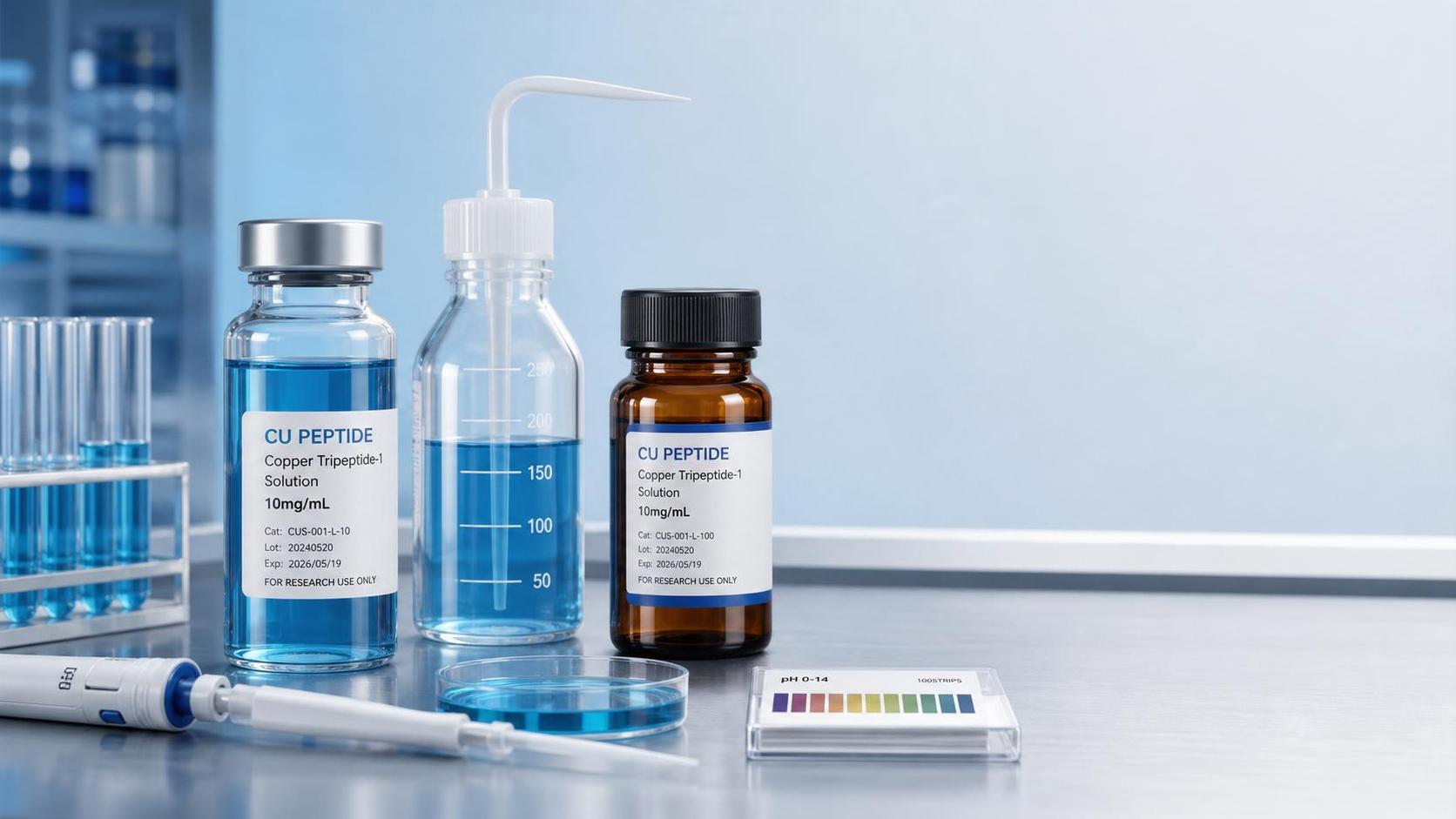
In today’s global pharmaceutical and premium cosmetic ingredient markets, the demand for peptides has experienced exponential growth. For international brand owners and research institutions, managing supply chain expenses while maintaining market competitiveness is a core priority. Industry insights indicate that bypassing traditional intermediaries to partner directly with a Chinese source peptide factory can often reduce overall procurement costs by 30% or more. The core business logic behind this reduction rests on three irreplaceable advantages:
1. Complete Elimination of Multi-Tiered Middleman Markups
The traditional cross-border procurement pipeline for peptides is often lengthy, involving export brokers, overseas distributors, and regional agents. Because peptide ingredients (such as Semaglutide, Tirzepatide, and Copper Peptide) require high technical expertise and involve asymmetric market information, each layer of intermediaries typically adds a 15% to 40% markup to cover their own warehousing, compliance, and financing costs. By establishing a direct connection with a source factory in China, global buyers secure factory-direct wholesale pricing, successfully reclaiming those eroded margins and converting them into a substantial cost advantage.
2. Scale Economies from Comprehensive Industrial Chain Integration
As a prominent hub for global chemical synthesis and biomanufacturing, China boasts an incredibly robust and integrated supply chain network.
◾ Localized Raw Materials: Chinese peptide factories enjoy unrivaled domestic availability when sourcing amino acid monomers, protecting groups, and various solvents required for solid-phase synthesis. This significantly lowers raw material costs compared to overseas facilities.
◾ High-Capacity Scalability: Modern Chinese peptide factories, equipped with large-scale Solid-Phase Peptide Synthesis (SPPS) systems, can seamlessly scale production from grams to kilograms. This large-scale manufacturing capacity drastically dilutes the separation, purification, and labor costs per batch, resulting in highly competitive factory-gate pricing globally.
3. Efficiency Gains from One-Stop Customization and Compliant Logistics
Cost reduction extends beyond the product quotation itself; it also manifests in the minimization of hidden "time-to-market" costs:
◾ Zero-Distance Technical Communication: When dealing with custom sequence requests, international brands communicate directly with the factory’s internal R&D team. Synthetic routes and process optimization can be finalized within 24 to 48 hours, eliminating the communication bottlenecks, delays, and repetitive sampling fees caused by relying on third-party traders.
◾ Established Global Logistics Compliance: Premier Chinese peptide factories typically employ dedicated international logistics teams well-versed in global chemical customs policies. They provide integrated, compliant shipping solutions. This end-to-end expertise greatly minimizes the financial risks associated with customs detentions, rejections, or delivery delays.
Conclusion
Slashing procurement costs by 30% or more does not mean compromising on quality standards; rather, it represents the optimization of capital through supply chain flattening and the elimination of redundant distribution costs. By forging long-term strategic partnerships directly with technically mature, compliant Chinese peptide factories that guarantee 99%+ purity, global enterprises secure not only direct pricing dividends but also a stable, scalable production anchor to lead the rapidly evolving market.
Our Product
Online Message
Online Message
Thank you very much for writing to us. Please leave your message and contact information, we will reply to you within 24 hours.